According to Examiner.com

According to Examiner.com
According to the Examiner.com---since 01/09/11
Showing posts with label HIV. Show all posts

Wednesday, March 25, 2015

Diagnosis: HIV-Associated Vacuolar Myelopathy


I've waited two days to say anything after my Cleveland Clinic Visit for the chest and back pain, as well as my current and re-accuring problems with balance and walking.  I've gone 12 years without a diagnosis.  12 long years of misdiagnosis, pain killers and medication that didn't work and the brush off when nothing could be found.  It's been emotionally exhaustive.  I've currently been with a home visiting nurse, a home physical therapist and a social worker.  I've also was fortunate enough to get an adjustable hospital bed, which I love by the way.  But it has been unbearable since the middle of January.  

It's felt very lonely.  It's been emotionally, physically, and spiritually draining.  I feel lost. 

Now though I have a diagnosis.  One I'm not overly thrilled with, but at least a diagnosis.  One that technically can not be treated except for what I am doing now by being on morphine and a course of HIV anti-retrovirals.  I saw a psychologist today who wants me to up the strength of my Zoloft and he is going to help me find a grief group.

I'm at a point right now in my life where I'm going to beg for people to talk to me about this.  Help me through this.  Help me cope, and as the psychologist said today "to find my sense of freedom."  There are things I need to figure out.  Beyond teaching what can I do with my MFA.  I'm not opposed to teaching, I would just like to know my options.  Should I continue on and earn my Doctorate in Modern African American Literature or do I immediately enroll in the government school program to teach and in 5 years would forgive my student loans.  I have personal issues I have to work through as well and I don't have the answer to those either.  BUT:

On a positive note I did graduate from Kent with Full Honors with a document that is now my first self-published book, I have had two articles about my writing recently, I have had rave reviews of my book, I'm enrolled in one of the best grad schools in the country and will have my MFA in Creative writing the beginning of January 2016.  I will have a second completed manuscript when I leave Fairfield that could become my third book.  I'm finishing my second now.  I won second place in poetry contest my first semester at Fairfield.  On July 16th of this year I celebrate 25 yrs. with AIDS.  So I know I have a lot going for me.  Yet, somehow, I have to begin to embrace and acknowledge what I have done and while living with a chronic illness.

I ask for your support, your love, your friendship and your prayers.  I'm so very grateful and blessed to have the people I do in my life.

Charlie


HIV-Associated Vacuolar Myelopathy

Overview

Vacuolar myelopathy is the most common chronic myelopathy associated with HIV infection. HIV-associated vacuolar myelopathy occurs during the late stages of HIV infection, when CD4+ lymphocyte counts are very low, often in conjunction with AIDS dementia complex, peripheral neuropathies, and opportunistic infections or malignancies of the central or peripheral nervous system (eg, cytomegalovirus, progressive multifocal leukoencephalopathy, lymphoma).
For patient education information, see the Immune System Center, Dementia Center, and Sexually Transmitted Diseases Center, as well as Dementia Due to HIV Infection and HIV/AIDS.

Pathophysiology

Several hypotheses have been proposed to explain the development of this common complication of HIV-1 infection. One hypothesis is infiltration by HIV-infected mononuclear cells that secrete neurotoxic factors, including cytokines, possibly in conjunction with neurotoxic astrocyte factors. A significant amount of scientific support exists for this paradigm. Transgenic mice that express HIV gene products in oligodendrocytes develop clinical and histologic features that resemble the human disease.
Although direct HIV infection of astrocytes and neurons is reported in the brain and dorsal root ganglia, it is not a major feature in vacuolar myelopathy.
The impaired ability to utilize vitamin B-12 as a source of methionine in transmethylation metabolism for myelin maintenance in the spinal cord may be a contributing factor.

Epidemiology and Prognosis

Before the introduction of highly active antiretroviral therapy (HAART), vacuolar myelopathy was seen in 5-20% of adult HIV patients in clinical studies and in 25-55% of adult HIV patients in histologic studies. Since the introduction of HAART, it is estimated that fewer than 10% of AIDS patients develop HIV myelopathy.

The prognosis in HIV patients with vacuolar myelopathy is poor.

Clinical Presentation:

Vacuolar myelopathy typically presents as a slow progression of painless leg weakness, stiffness, sensory loss, imbalance, and sphincter dysfunction. Relapsing-remitting courses have also been described.[1]

 Arm function is usually normal except for advanced vacuolar myelopathy.
Vacuolar myelopathy is often associated with AIDS dementia complex and peripheral neuropathy. In such cases, patients have cognitive decline and distal limb pain and numbness.

Physical examination:

The following may be noted on physical examination:
  • Slowly progressive spastic paraparesis
  • Hyperreflexia and extensor plantar responses
  • Sensory ataxia
  • Incontinence
  • Rarely, asymmetric features and involvement of upper extremities
A discrete sensory level is usually absent; if present, this strongly suggests other causes of myelopathy.

Diagnostic Considerations

The differential diagnosis includes neurosyphilis. Other problems to be considered in the differential diagnosis of HIV-related vacuolar myelopathy include the following:
  • Herpes simplex virus infection
  • Cytomegalovirus infection
  • Cervical disk syndromes
  • HIV-1 associated conditions (eg, Kaposi sarcoma, lymphoma, toxoplasmosis) in the spinal canal
  • Mycobacterium tuberculosis infection
  • Compressive myelopathy (eg, tumor, abscess, herniated disc, arteriovenous malformation)
  • Human T-cell lymphotropic virus type 1 (HTLV-1)–associated myelopathy/tropical spastic paraparesis (can co-exist with HIV infection)
  • Spinal epidural abscess in HIV-infected parenteral drug users

    Diagnostic Tests
Electrophysiologic tests can confirm a clinical diagnosis of vacuolar myelopathy. Somatosensory evoked potential (SSEP) may be a valuable tool in the diagnosis of AIDS-associated myelopathy, particularly when myelopathy and peripheral neuropathy coexist.[2]

Serum studies can determine vitamin B-12 and folic acid levels. In patients with borderline low B-12 levels, elevated homocysteine and methylmalonic acid levels are better indicators of a deficiency. B-12 levels are usually normal in vacuolar myelopathy.

CT scan results are often noncontributory but may reveal unsuspected coexisting conditions such as extramedullary or intramedullary infections, neoplasms, degenerative disk disease, or degenerative joint disease of the spine.

Magnetic Resonance Imaging:

MRI scans are often noncontributory but may reveal unsuspected coexisting conditions such as extramedullary or intramedullary infections, neoplasms, degenerative disk disease, or degenerative joint disease of the spine.

Spinal cord atrophy is the most common abnormal finding involving the thoracic cord with or without cervical cord involvement. T2-weighted MRI often shows symmetric nonenhancing high-signal areas, which are present on multiple contiguous slices and are usually symmetrical; these may result from extensive vacuolation.[3, 4, 5]

Care for patients with HIV-associated vacuolar myelopathy is primarily supportive. Although no specific treatment is currently approved for this syndrome, viral control tailored to the individual patient's medical and viral history is important, as case reports showing clinical and radiologic improvement with highly active retroviral therapy (HAART) have been described.[9, 10, 11, 2]


Author
Niranjan N Singh, MD, DM, Associate Professor of Neurology, University of Missouri-Columbia School of Medicine
Disclosure: Nothing to disclose.

Coauthor(s)

Florian P Thomas, MD, MA, PhD, Drmed:

Director, Regional MS Center of Excellence, St Louis Veterans Affairs Medical Center; Director, National MS Society Multiple Sclerosis Center; Director, Neuropathy Association Center of Excellence, Professor, Department of Neurology and Psychiatry, Associate Professor, Institute for Molecular Virology, St Louis University School of Medicine

References

  1. Anneken K, Fischera M, Evers S. Recurrent vacuolar myelopathy in HIV infection. J Infect. Jun 2006;52(6):e181-3. [View Abstract]
  2. Tagliati M, Di Rocco A, Danisi F, Simpson DM. The role of somatosensory evoked potentials in the diagnosis of AIDS-associated myelopathy. Neurology. Apr 11 2000;54(7):1477-82. [View Abstract]
  3. Chong J, Di Rocco A, Tagliati M, et al. MR findings in AIDS-associated myelopathy. AJNR Am J Neuroradiol. Sep 1999;20(8):1412-6. [View Abstract]
  4. Santosh CG, Bell JE, Best JJ. Spinal tract pathology in AIDS: postmortem MRI correlation with neuropathology. Neuroradiology. Feb 1995;37(2):134-8. [View Abstract]
  5. Sartoretti-Schefer S, Blattler T, Wichmann W. Spinal MRI in vacuolar myelopathy, and correlation with histopathological findings. Neuroradiology. Dec 1997;39(12):865-9. [View Abstract]
  6. Eilbott DJ, Peress N, Burger H, et al. Human immunodeficiency virus type 1 in spinal cords of acquired immunodeficiency syndrome patients with myelopathy: expression and replication in macrophages.Proc Natl Acad Sci U S A. May 1989;86(9):3337-41. [View Abstract]
  7. Tyor WR, Glass JD, Baumrind N, et al. Cytokine expression of macrophages in HIV-1-associated vacuolar myelopathy. Neurology. May 1993;43(5):1002-9. [View Abstract]
  8. Petito CK, Navia BA, Cho ES, et al. Vacuolar myelopathy pathologically resembling subacute combined degeneration in patients with the acquired immunodeficiency syndrome. N Engl J Med. Apr 4 1985;312(14):874-9. [View Abstract]
  9. Bizaare M, Dawood H, Moodley A. Vacuolar myelopathy: a case report of functional, clinical, and radiological improvement after highly active antiretroviral therapy. Int J Infect Dis. Jul 2008;12(4):442-4.[View Abstract]
  10. DiRocco A. HIV-associated myelopathy. Current Treatment Options in Infectious Diseases. Vol 5. 2003:457-465.
  11. Fernandez-Fernandez FJ, de la Fuente-Aguado J, Ocampo-Hermida A. Remission of HIV-associated myelopathy after highly active antiretroviraltherapy. J Postgrad Med. 2004;50(3):195-6. [View Abstract]
  12. Di Rocco A, Tagliati M, Danisi F, et al. A pilot study of L-methionine for the treatment of AIDS-associated myelopathy. Neurology. Jul 1998;51(1):266-8. [View Abstract]
  13. Di Rocco A, Werner P, Bottiglieri T, et al. Treatment of AIDS-associated myelopathy with L-methionine: a placebo-controlled study. Neurology. Oct 12 2004;63(7):1270-5. [View Abstract]
  14. Staudinger R, Henry K. Remission of HIV myelopathy after highly active antiretroviral therapy. Neurology. Jan 11 2000;54(1):267-8. [View Abstract]


Friday, January 20, 2012

HIV Testing: Gay Couples Encouraged To Get Tested, Hear Results Together Under New Program

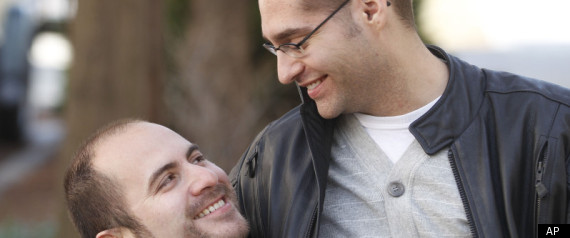
Dominic Poteste Gay CoupleCHICAGO -- Newly dating and slightly anxious, two men bared their arms for blood tests and pondered the possibility that one of them, or both, could be infected with HIV. An innovative program – called Testing Together – would allow them to hear their test results minutes later, while sitting side by side.

Eric Zemanovic, a dental hygienist, and Dominic Poteste, a restaurant server, had been dating two months after a yearlong friendship. In the past, they'd both practiced safe sex and got regular HIV tests. Both are in their early 30s. They'd grown up when AIDS meant an early, horrible death. So, whenever they heard about friends testing positive, they felt pangs of fear.

Poteste explained: "There's always an anxiety that comes with getting tested, even though 99 percent of the time I've been safe and been careful, there still is always ..." His voice trailed off.
"A slight possibility," Zemanovic completed the sentence.
"A slight possibility," Poteste agreed.
___
Testing Together, now under way in Chicago and Atlanta, takes an unusual approach: It encourages gay male couples to get tested together and hear their results together. After delivering the results, a counselor talks with the couple about what to do next, including agreements they may want to make with each other about sex and health.

Are we agreeing to be monogamous? Is any sexual activity outside the relationship OK? How are we going to protect each other from infection? Couples address these questions and more.

The idea is to bring honesty to sexual relationships, said one of the researchers behind the program, Rob Stephenson of the Rollins School of Public Health at Emory University in Atlanta.

Relationships offer only "mythical protection" from HIV, Stephenson said. Some couples may have avoided talking about each other's HIV status, thinking, "If he were HIV positive he would have told me," or "If he wanted to know, he would have asked."

Poteste and Zemanovic, the newly dating Chicago couple, differed in their past approaches. Zemanovic was in the habit of asking his sex partners about their HIV status; he was "neurotic" about it, he said. Poteste hadn't been as sexually active as his new boyfriend, but he hadn't always asked the questions: Have you been tested? What's your status?

"You have an assumption that if there's something this person could do to potentially hurt me, they would tell me," he said.

Zemanovic hoped getting tested together and discussing results with a counselor would build trust between them.

Poteste hoped the counselor could help them start a conversation so they could ask and answer difficult questions.
___
It started in Africa more than 20 years ago. Researchers believe couples testing has successfully reduced the spread of AIDS among married, heterosexual couples in some African regions. One study that looked at couples where one spouse is HIV positive and the other is HIV negative estimated that couples testing was cutting the rate of transmission by more than half.

In Washington, D.C., where the rate of HIV infection rivals some African nations, some community agencies allow couples to test together. Family and Medical Counseling Service Inc. has been testing about 145 couples together annually since 2008. Most are heterosexual couples.
In Chicago and Atlanta, Testing Together, funded by the MAC AIDS Fund, hopes to test 400 couples by the end of the year.
___
Each participant in Testing Together signs a consent form that addresses receiving counseling, testing and results with a partner in the same room at the same time with a trained counselor: "I hereby consent to allow my partner to know the results of my HIV test," it begins.

The program challenges conventional practices in the United States, where HIV testing is usually private and for individuals only. At most other clinics, a man who asks if his partner can be there when he hears his test result is denied because of patient confidentiality concerns.

There are two trends fueling Testing Together. One, the number of gay Americans telling the U.S. Census they're living with same-sex partners nearly doubled in the past decade, to about 650,000 couples. About half those same-sex partnerships are gay men.

What's more, a new line of research suggests that up to 68 percent of new HIV infections in gay men come from a main sex partner, not from casual sex, in part because main sex partners are more likely to forgo condoms.

Counselors are trained on how to deliver test results, with particular emphasis on how to tell partners the most difficult news: one partner has the virus and the other doesn't. With these so-called "HIV discordant" couples, counselors have a great opportunity to reduce the spread of the virus by helping the couple learn ways to protect the uninfected partner, primarily through correct and consistent condom use.

Counselors are trained to dispel myths. If the couple thinks the test result means one partner has been unfaithful, the counselor might point out that the infected partner could have acquired HIV before the partner became a couple. If the couple believes the virus is "sleeping" and can't be transmitted, the counselor might explain that HIV can be transmitted even if there are no signs or symptoms. If the couple believes their status is proof that precautions aren't needed, the counselor might explain that HIV could be transmitted in the future as the infected partner's virus levels rise.

Sam Hoehnle is a counselor in the Chicago program. "It never becomes easier emotionally" to deliver the news to an HIV discordant couple, Hoehnle said. He tells the HIV negative partner his results first, then spends more time and attention on the HIV positive partner. He's seen partners support each other, but he acknowledges he can't read minds. A show of compassion could mask anger or fear.

"You don't know what's happening internally, in their heads, about how they're feeling about each other," he said.
___
Poteste and Zemanovic got the best news possible: They were both HIV negative.

They both laughed with the sheer relief of it. The counselor had been nonjudgmental and hadn't wanted to talk about the past, only the future, pressing them to talk specifically and directly about their agreement on sex outside the relationship.

Zemanovic: "We both agreed on monogamy. And if we do need to go outside the relationship (we agreed) to talk to each other and find out, `OK, what do we need to do here?'"

Poteste: "This was a full exploration of (monogamy), whereas before, it was a casual statement or a passing joke that was maybe passive-aggressive.... We need to be much more direct in communications than we have been."

As a thank-you gift for participating in the program, they received two movie passes and a gift certificate for drinks and popcorn.

After the other decisions they'd made that day, deciding on which movie to see would be a snap.

Tuesday, December 20, 2011

HIV Is Not a Crime--or Is It?


HIV Is Not a Crime is a shocking film that asks some basic questions we all need to think about.
Do you think people living with HIV should have to register as sex offenders? Do you believe people living with HIV should be sentenced to 25 years in prison for a sexual act that did not result in transmission of the HIV virus?

Would the fact that an individual did not disclose his or her HIV-positive status change your answer? Do you think someone living with HIV should be virally defined as a second-class citizen with fewer rights and more legal liabilities than someone who is either uninfected or is unaware of his or her status HIV status?
HIV is not a crime. Or is it?

Thirty-four states and two U.S. territories have laws on their books that state that if a person living with HIV has sexual relations without prior disclosure of his or her HIV-positive status, then that person is committing a crime. Some laws permit sentencing a person living with HIV to jail (for up to 25 years) for having consensual sex with someone who is HIV-negative (or does not know his or her HIV status) without prior HIV disclosure -- often even if a condom is used and no HIV is transmitted.

Prosecutions against HIV-positive individuals have occurred in at least 39 states (some states have used non-HIV-specific laws for sexual assault), invoking a spectrum of charges including attempted murder, sexual assault, and assault with a deadly weapon. Yes, ignorance has led to defining blood, semen, vaginal fluid, vomit, and saliva of people living with HIV as "deadly weapons" by the courts -- and has even led to claims of "bio-terrorism" -- even though HIV is now considered a chronic manageable disease. In five states alone more than 500 people have been charged under these laws.

These laws are problematic for several reasons. First, they violate the human rights of people living with HIV by creating a viral sub-class of people (based upon testing positive for the HIV virus) who are singled out for unjust prosecution and excessive punishment in the absence of actual wrongdoing for behaviors that otherwise would be legal for anyone who has not tested HIV-positive. This violates our nation's values of fair and equal treatment under the law.

HIV criminalization laws were supposedly drafted to prevent the transmission of the virus, yet they actually do the opposite: they drive people away from HIV testing, since knowing your status can subject you to criminal prosecution.

In fact, these laws are at odds with evidence-based prevention strategies. They place the burden of responsibility for disclosure of HIV status and the negotiation of condom use solely on the HIV-positive individuals. They absolve the HIV-negative or untested of responsibility for their own health or the health of others. They also absolve the untested of prosecution under HIV transmission laws. Incidentally, the CDC estimates that 20 percent of HIV-positive Americans do not know they are living with HIV.

These punitive laws drive people at risk of HIV infection underground and away from HIV testing, counseling, referral to treatment, care, and support. Evidence-based prevention strategies call for encouraging at-risk individuals to seek out testing, information, treatment, care, and support.
The great majority of HIV-related prosecutions have taken place in North America, Western Europe, and Australia. But in recent years, many poorer countries have also adopted such laws. In sub-Saharan Africa, 20 countries have passed HIV-specific criminal statutes in the last five years.

So what is being done to combat these counterproductive, unjust laws? At the United Nations, the "Global Commission on HIV and the Law" was launched in June 2010 by UNDP and UNAIDS. It has investigated the relationship between legal environments, human rights, and HIV and aims to develop actionable, evidence-informed and human-rights-based recommendations for effective legal responses that promote and protect the human rights of people living with, and those most vulnerable to, HIV. The Commission has reported its finding in Geneva this month to the Programme Coordinating Board of UNAIDS and will issue a final report in early 2012.

Congresswoman Barbara Lee, a California Democrat and member of the Global Commission on HIV and the Law, has also introduced H.R. 3053 -- the "Repeal HIV Discrimination Act" -- in the U.S. Congress. This bill creates incentives and support for states to reform existing policies that use the criminal law to target people living with HIV for felony charges and excessive punishment for behavior that is otherwise legal (consensual sex between adults) and that poses no measurable risk of HIV transmission.

What can you do to address this social injustice? First, you should contact your member of Congress and ask that he or she co-sponsor H.R.3053. Next, you can pass around this link -- and post it to Facebook, Twitter, and other social networks -- for HIV Is Not a Crime, a compelling, powerful, and tragic film about the criminalization of HIV in America, created by POZ Magazine founder Sean Strub.

Nick Rhoades and Robert Suttle are two HIV-positive, gay men interviewed in the film. On Thursday, Dec. 15th in Geneva, they spoke at the Programme Coordinating Board Meeting of UNAIDS to discuss their own prosecutions and convictions as lifetime sex offenders, due to being accused of having sex without disclosing their HIV-positive status, even though both used condoms during sex and neither transmitted HIV to their accusers. Please listen to their stories.

To learn more about this issue, go to:
http://www.hivlawandpolicy.org/public/initiatives/positivejusticeproject
http://www.hivlawcommission.org/
http://www.unaids.org/en/ (the UNAIDS website)

Tuesday, November 15, 2011

Hillary Clinton Names Ellen Degeneres HIV AIDS Special Envoy


Secretary of State Hillary Clinton has named talk show host and comedian Ellen DeGeneres as the U.S. government's Special Envoy for Global AIDS Awareness. The announcement came Tuesday (Nov. 8) at the National Institute of Health during Clinton's address about AIDS and the HIV virus.

Clinton says of DeGeneres, "[Ellen] is going to bring not only her sharp wit and her big heart, but her impressive TV audience and more than 8 million followers on Twitter, to raise awareness and support for this effort. I know we can look forward to many contributions from Ellen and her loyal fans across the globe."

"I’m honored to have been chosen by Secretary of State Hillary Rodham Clinton as Special Envoy for Global AIDS awareness.  The fight against AIDS is something that has always been close to my heart.  And I’m happy that I can use my platform to educate people and spread hope. Now, if you’ll excuse me, I have to go look up what “envoy” means," said talk show host Ellen DeGeneres.
*Envoy - a diplomatic agent of the second rank, next in dignity after an ambassador, commonly called minister.
              aka - an accredited messenger or representative.

Thursday, September 29, 2011

More HIV vaccine news

While many who work down in the trenches of HIV/AIDS activism have long given up any hope of an effective vaccine in our lifetimes, small glimmers of hope continue to occasionally peek through the clouds. From a small vaccine study in Spain, a result that may reduce HIV to a "minor chronic infection" such as herpes:
The trial demonstrated how the vaccine stimulates the production of lymphocytes B, which produces HIV attacking antibodies that block the virus from infecting healthy cells. Blood tests during the 48th week revealed that 72.7% of the treated volunteers had developed these HIV fighting antibodies. However generating a long lasting response against future attacks truly renders the vaccine effective. This is achieved when the body maintains a basic memory level of T lymphocytes, which are generated after the first attack and can circulate the body for years. The T lymphocytes are responsible for stimulating the attacked cell's immune response, which can then identify and destroy the HIV virus. Blood tests during the 48th week revealed that the 85% of the patients maintained the memory T lymphocytes immune response. "MVA-B immune profile meets, initially, the requirements for a promising HIV vaccine," says Esteban. Although it does not remove the virus from the body, the immune response induced by the vaccine could keep the virus under control by destroying the infected cell.
A new phase of trials with infected volunteers is set to commence. While this and other vaccine studies have showed some promise, most have failed. And none have been shown to work in all subjects.

Friday, September 9, 2011

HIV/AIDS Funds diverted to a strip Club? Scandal?

D.C. Attorney General Irvin Nathan has accused Miracle Hands, an HIV/AIDS service provider in Washington, DC that is owned by Cornell Jones, of spending nearly $300,000 in federal tax dollars to open a strip club.

According to the Washington Examiner, Cornell Jones “is a self-described former D.C. drug kingpin with convictions for narcotics distribution on his record.”
The lawsuit claims that the agency requested the funds to renovate a warehouse for use as a resident job training center for HIV-Positive individuals.

Funding for the renovation of the Queens Chapel Road warehouse was released in 2005, continued in 2006 and in April of 2007 Miracle Hands received an additional $139,000 to complete the renovations. The warehouse at 2127 Queens Chapel Road NE, opened as the Stadium Club in early 2010.

Tuesday, December 14, 2010

Man Officially cured of AIDS

For the first time ever, a man has been cured of HIV. The remedy may nearly have killed him, but it opens a door—just a crack—to hope that we may someday kill off the scourge for good.


Strangely enough, the diagnosis that most concerned Timothy Ray Brown in 2007 was acute myeloid leukemia. HIV has been increasingly thought of as a manageable disease, though certainly a terribly burdensome one. What brought the 42-year old Brown under the care of Germany's Charite Universitatsmedizin Berlin hospital was the more immediate threat his cancer pose.
The treatment Brown underwent was aggressive: chemotherapy that destroyed the majority of his immune cells. Total body irradiation. Finally, a risky stem-cell transplant that nearly a third of patients don't survive—but that appears to have completely cured Brown of HIV.
Doctors were savvy when they chose a stem cell donor for Brown. The man whose bone marrow they used has a particular genetic mutation, present in an incredibly small percentage of people, that makes him almost invulnerable to HIV. With Brown's own defenses decimated by treatments, the healthy, HIV-resistant donor cells repopulated his immune system. Three years later, having taken no antiretroviral drugs since the transplant, extensive testing shows no signs whatsoever of HIV.
He's cured.

What does this mean for the future of treatment? It's not as though every HIV patient can or would want to go through the tremendous suffering that was prelude to Brown's recovery, or be able to afford the procedure if they could or did. But for the first time, we know that HIV can be cured, not just managed. It opens new avenues of research—gene therapy, stem cell treatments—that may otherwise have been thought dead ends.

Friday, December 10, 2010

HIV-Positive LA Porn Actor Calls for Condom Use

An adult film actor who tested positive for HIV says he now wishes he had known more about the risks of contracting sexually transmitted diseases in the industry and is calling for mandatory condom use in porn films.

Derrick Burts, 24, identified himself to the Los Angeles Times as the performer who tested positive at the Adult Industry Medical Healthcare Foundation in Sherman Oaks in October. He had previously been known as Patient Zeta.

Burts, who performed in straight films as Cameron Reid and gay films as Derek Chambers, described the panicked call he got from clinic staff on Oct. 9 about the infection that sent fears through California’s adult industry.

Clinic staff told him they wanted to perform a follow-up test and begin notifying performers he had worked with since his last negative test result Sept. 3. He was told those performers would be placed on a quarantine list and also would be tested.

When Burts returned to the clinic Oct. 23 to review the second test results, he said he was told that the clinic had traced his HIV infection to someone he had performed a scene with, someone they described as a "known positive." The clinic would not identify the performer because of patient confidentiality

Burts said he believed he may have contracted the disease during a gay porn shoot in Florida.
Despite Burts’ account of what he was told, clinic officials released a statement last month that said "Patient Zeta acquired the virus through private, personal activity."
"That’s completely false," Burts told the Times. "There is no possible way. The only person I had sex with in my personal life was my girlfriend."

She tested negative, he said.

An e-mail to the Adult Industry Healthcare Foundation seeking comment late Tuesday was not immediately returned.

Burts said the clinic promised to put him in touch with a doctor affiliated with the clinic and promised to arrange for his follow-up care. But he said no one called him back and when he contacted the clinic, he received no response for two months.

In frustration, Burts said he went to an AIDS Healthcare Foundation center in Los Angeles on Nov. 24 but didn’t identify himself as Patient Zeta.

Burts said he was pleased with the care he received there and contacted the head of the organization last week and identified himself as Patient Zeta. He said he wanted to speak out in favor of enforcing mandatory condom use in porn productions.

The Times reported the foundation had scheduled a news conference with Burt on Wednesday, Dec. 8.
Burts grew up in Whittier and Hemet and graduated from Hemet High School and a hotel management school in Florida, according to the Times. He worked as a hotel manager and cruise ship magician before becoming a performer in the lucrative porn industry.

"Making $10,000 or $15,000 for porn isn’t worth your life," he told the Times. "Performers need to be educated."

Saturday, November 27, 2010

Mondo Guerra on the cover of Poz Magazine

Well kids, our boy Mondo has made the cover of the December issue of Poz Magazine.  He is listed as one of the top 100 AIDS Fighters.  He is number......42 ----"The newly openly HIV_positive star of Project Runway disclosed his satatus in a tear-inducing moment of truth in front of millions, redirecting the spotlight to the cause and reminding the viewing public that AIDS is anything but over in America." this is on page 40 of the magazine.  Also according to the magazine you can read an interview with Mondo on their wesite Poz.com --- the direct link kids is

http://www.poz.com/articles/Editors_letter_Secret_2546_19363.shtml

So here are the pictures from the magazine