According to Examiner.com

According to Examiner.com
According to the Examiner.com---since 01/09/11
Showing posts with label book review. Show all posts

Monday, April 1, 2013

Beyond John Dunn by Thurman P. Banks Jr: A Book Review

I spent part of my Spring Break reading Thurman P. Banks Jr.'s new self published book "Beyond John Dann".  Let me begin in saying I "met" Thurman on Twitter, I honestly can't remember if I found him or if he found me but, either way we both share a common trait, we're both writers.

Anyhow, Thurman was promoting his new book on Twitter--- "Beyond John Dunn" when I approached him and asked if I could buy direct from him and have him sign it-- he did.  Know, before anybody gets to thinking there is more here than what I am stating--- there is not.  Thurman did not ask me to write a review, and as of this writing Thurman has no idea I am even doing this.  I "barely" know Thurman, except for the few e-mails we have exchanged, but if given the chance I would cherish the day I could call Thurman---my best friend.

This is also a first for this blog, where I review a book, but this book-- well it's an exception to the rule and I wanted to share with you, my readers why.


John Dann is the youngest, and also last child of Susan and John  Dann Sr.  He is also the only boy in a group of five sisters, and the seven of them live in Hayward County, Connecticut.  John Sr., or Big John as he was nicknamed,  is an alcoholic as well as being an abusive husband and father in the beginning of the story, who is prone to both physical and mental abuse of everyone except John Jr.

Life has a way of moving forward and after some pages into this book, Big John leaves the family high and dry by walking out on all of them—although he was not really there all that much to begin with.  In an ironic twist Susan, now on her own with six children to raise, throws all the girls out of the house to fend for themselves and only “keeps” John Jr. at home.  

 In this midst of this Susan also because the abuser and works here way through a string of men—who John Jr. believes are just “friends”.  This string of men woven throughout Susan’s life ends with a man named Austin.
 
Austin, well he is the character I tend to believe, everyone will hate—unemployed, no ambition, a bit of a bum and we come to learn through the text--- a child molester.  Austin sexually abuses a few of Susan’s granddaughters.  While many women would  immediately walk away, Susan does everything in her power to--- in the words of Tammy Wynette ---“stand by her man” including mortgage her home, lose her family and go into a tailspin of self-abuse with alcohol and denial. 

Alcoholism and drug use, as well  trying to quit, the ramifications on a family because of self-abuse and finally the toils self-abuse on the abuser all devastatingly and honestly  are discussed here.  It is this theme that, in my opinion, that reverberates throughout the entire text.  But it is not only about the loss, the hurt, the shame-- this book is also about the hope, the triumph as well as the loss and finally about the growth it takes to become more than “our problems”.

John Sr. on the other hand goes through a metamorphosis in this book and with his outcome, which I do not want to give away, you are left vulnerable and sensitive just like his family is.  The girls (sisters), all but one, share their problems with men, marriage, booze, pills and one even later in the text comes out as a lesbian Buddhist.

The majority of this story is John Jr. and his struggle with accepting and acknowledging his own pain, his own loss, and his own addictions and failed relationships.  The agony here is very authentic and rips your heart out, where in parts you are left crying as you turn the page.  But like John Sr., John Jr. also goes through his own transformation, and we the readers of this text get a painful yet joyful front seat to that glorious transformation.

Thurman P.  Banks Jr., weaves sentences like no other--- there are so many quotable passages here that linger in you consciousness—I want to give you an example:

Mine is a tortured love affair that I have tried to walk away from, but cannot.  My destiny has been to walk these roads.  Every laugh, every tear, every emotion is another string tying me to this place.  But it’s the memory of her dying eyes that hold me with the greatest strength now.  Like a spiders prey caught in the web, they hold me, and devour me.”

There is here in this literary narrative an impression that this story “could be” first-hand experience— now I am not saying it or isn’t, that is up to Thurman to share if he wishes to do so--but what this text does is create honesty, vulnerability, openness and an outright frankness that makes you the reader believe that John Dunn Jr. exists, his experiences—not unlike other children of alcoholics—has really happened and that Thurman knows John Dunn Jr. like no other human being. Theirs is an exceptionally rare relationship where one can say anything without offending, know everything without walking away and know each other to the core, and still beyond everything be able to deeply love. If we can have that with one other person than we are deeply blessed, and Thurman has been blessed with John Dunn Jr.

This book, if you give it a chance, will be life changing.  It will give you characters and scenes you will not be able to forget, a book in many ways you will not be able to put down and in all honesty if some big publisher doesn’t pick this up—well it’s an outright damn shame.  This is the type of book, in my opinion, could be one of Oprah's Book Club choices and if she hasn't gotten a copy of this I think she should!

Thurman, thank you for incredible gift of “Beyond John Dunn” and for sharing his life with us, you were right—you are the only one who can tell this commanding and important story and we your readers thank you very deeply.  

Take the opportunity to buy Thurman P. Banks Jr.’s book "Beyond John Dunn", follow him on Twitter at @thurman_p and finally take time and curl up with a good book--- preferably his.

Saturday, October 8, 2011

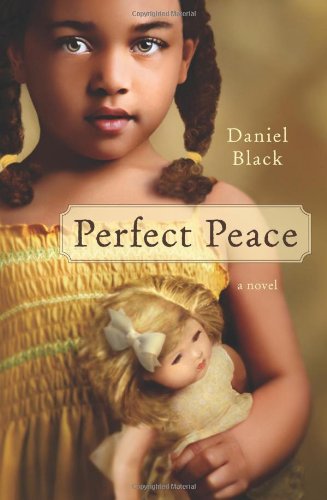
Book Review: "Perfect Peace" by Daniel Black


The heartbreaking portrait of a large, rural southern family’s attempt to grapple with their mother’s desperate decision to make her newborn son into the daughter she will never have.
 When the seventh child of the Peace family, named Perfect, turns eight, her mother Emma Jean tells her bewildered daughter, “You was born a boy. I made you a girl. But that ain’t what you was .....The heartbreaking portrait of a large, rural southern family’s attempt to grapple with their mother’s desperate decision to make her newborn son into the daughter she will never have.
 When the seventh child of the Peace family, named Perfect, turns eight, her mother Emma Jean tells her bewildered daughter, “You was born a boy. I made you a girl. But that ain’t what you was supposed to be. So, from now on, you gon’ be a boy. It’ll be a little strange at first, but you’ll get used to it, and this’ll be over after while.” From this point forward, his life becomes a bizarre kaleidoscope of events. Meanwhile, the Peace family is forced to question everything they thought they knew about gender, sexuality, unconditional love, and fulfillment.
 
Perfect Peace certainly can embrace the saying “What doesn’t kill you, makes you stronger.” Perfect was born male and his mother Emma Jean out of her desperation and need for a female child convinced her son he was a she. He was dressed in ribbons and dresses and often told how beautiful she was. He was not allowed to play with his/her brothers. When she would ask she was told “girls don’t play with boys, her younger brothers wanted to play with her but they were told shes supposed to do girl stuff.

At the age of eight Emma Jean takes Perfect into the woods and abruptly change Perfect from female to male(Perfect to Paul). She hacks her beautiful hair into a short cut, forces her to believe he’s a boy and must learn to act like one. She also tells Paul that he will be ok. Paul’s dad Gus is having trouble with this new information and in dealing with Paul. His mind is plagued with memories of Perfect his little girl, how does he transition his mind? How can he love a son who was once his little girl? Gus decides to let his son Authorly teach Perfect how to be a man. All six of her brothers try to help each one using their own talent and experience coupled with love of family. But its one brother that teaches Paul a lesson Jesus would be proud of.

As the family tries to heal after learning what Emma Jean has done the deception proves to be pretty strong for this family and no one can understand Emma Jeans reasoning. It’s not until the face of tragedy hits that moves this family towards healing and survival. Perfect Peace forces the reader to re-think what you feel you know about personal desires, identity, gender, and sexual orientation. Mr. Black did an excellent job of appropriating the language of our people during this time. Also if imagined how a child would handle an identity crisis that borders homosexuality amongst people who were not educated enough to have grace or mercy.

It is the opinion of this reviewer that Perfect Peace is a work of literary genius. No matter who you are we are all “perfect” in His eyes and should be allowed to live in “peace”. Next up “The Sacred Place” by the same author my library would be incomplete without The Sacred Place and “They tell me of a Home”.

Chaz Bono--Transtion: The Story of How I Became a Man --REVIEW

Chaz Bono's groundbreaking and candid account of a forty-year struggle to match his gender identity with his physical body and his transformation from female to male
 
At first, America knew the only child of Sonny and Cher as Chastity, the cherubic little girl who appeared on her parents' TV show. In later years, she became famous for coming out on a national stage, working with two major organizations toward LGBT (lesbian, gay, bisexual, transgender) rights and publishing two books. And just within the past eighteen months, Chaz Bono has entered the public consciousness as the most high-profile transgender person ever.
 
All through the hoopla surrounding his change, Chaz has insisted on maintaining his privacy. Now, in Transition, Chaz finally tells his story. Part One traces his decision to transition, beginning in his childhood-when he played on the boys' teams and wore boys' clothing whenever possible-and going through his painful, but ultimately joyful, coming out in his twenties, up to 2008, when, after the death of his father, drug addiction, and five years of sobriety, Chaz was finally ready to begin the process of changing his gender. In Part Two, he offers an unprecedented record in words and photographs of the actual transition, a real-time diary as he navigates uncharted waters. These chapters capture the day-to-day momentum of his life as his body changes.
 
Throughout the book, Chaz touches on themes of identity, gender, and sexuality; parents and children; and how harboring secrets shatters the soul. It is an amazing contribution to our understanding of a much- misunderstood community.

Monday, January 3, 2011

My Princess boy


"I look at myself in the mirror lately and I see this guy -- in earrings, pillbox hat, veil, maybe a little choker of pearls -- and I ask myself, 'Would a sane man dress like this?'---Cpl. Klinger, "MASH"

In the Army, dressing like a Disney princess might help you get a Section 8 discharge as a head case, but Cheryl Kilodavis is a lot less touchy about such things than the military. Her 5-year-old son dolls himself up in pretty pink dresses all the time.  Not that there's anything wrong with that.
In fact, Kilodavis has put together an entire picture book, "My Princess Boy," about how there's nothing wrong with that.

Some 12 years from now, will Dyson, her son, want that book trotted out and shown to his prom date or the guys on the football team? On the website for her book, Kilodavis says she hopes for a better world by then.
She writes that the book "is designed to start and continue a dialog about unconditional friendship and teaches children -- and adults -- how to accept and support children for who they are and how they wish to look."

At first, Dean and Cheryl Kilodavis were uncertain they should let their son sashay about looking like the Sugarplum Fairy. Cheryl Kilodavis tells the Today Show she told her son to knock it off -- in a kind, motherly way.

She explained that boys cannot be princesses.  Her older son, 8-year-old Dkobe, changed her mind.
"Dkobe said to me, 'Why can't you just let him be happy, Mom?' I realized at that moment that this was my issue, not his, and not Dyson's nor Dean's," she tells Today. "After taking a second to do some self-searching, I realized I had years of preconceived notions from my childhood, spiritually and culturally. After journaling, I printed a prototype of my book at a local copy center and used it as a tool to share my feelings. It explained how exclusion hurts and how even a basic level of acceptance can really change lives."
Of course, mothers have a reputation -- perhaps even a stereotype -- of indulging their children's eccentricities. What about Dean Kilodavis? How does he feel about all this?

He thinks it's pretty cool, actually. "It's not contagious," he tells Today. "He's just like any other kid. He plays checkers, he plays in the trees. He just likes to do it in a dress. Big deal."

It might be a big deal to a bully looking for faces to rearrange. But Cheryl Kilodavis tells the network you can't stop bullies by sacrificing who you are.

"I understand that we all want life to be easy for our children," she tells the network. "I want that, too. But I don't think bullying will stop if my son wears traditional boy clothes. We need a wake-up call. America needs one. The world needs one. We need to start asking ourselves why we are condemning people and things just because they are different and make us feel uncomfortable."

It is the bullies that need to be stopped, she says, not their victims. "Bullying is taking lives. It is unacceptable. Period," she tells Today. "We must stop standing by while others are being harmed for expressing themselves. Our children are teaching us how to accept them every day. We all want our children to live in a world where they can express themselves without harming anyone else or being harmed."
What does Dyson say about all this?

"I'm a princess boy and I love wearing dresses and I love the colors of pink and red," he tells Today.

Tuesday, July 6, 2010

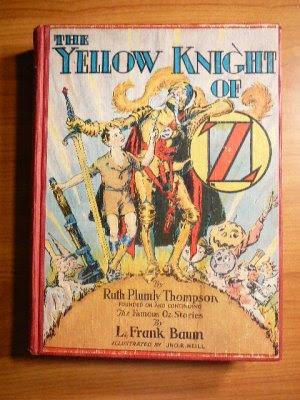
Yellow Knight of Oz

Well over the 4th of July weekend we went to the Hartville Flea Market and while I was only able to walk 4 aisles I found one of the best finds ever!  Three Old Oz books, one of which is a FIRST Edition!  Rarer still was all 3 books for $50!!! Unthinkable!  So the first of the three that I have finished was "The Yellow Knight of Oz" by Ruth Plumly Thompson and my editionis a later "White Edition" with no color plates.  I found the following review onlineabou the book, hoping it would encourage to read it as well.

“I must have mud and you must have adventure. Oh why,” wailed Ploppa, with a smothered sob, “cannot people who like each other like the same things?”
In The Yellow Knight of Oz, Ruth Plumly Thompson produced one of her most jumbled, yet most delightful, books, a mix of mud, Arthurian knights, irritated underground dwellers, trees melting into people, and science fiction. The result should not make any sense, and yet it does, creating an often moving tale of how, even in the best and most magical of fairylands, you may not always get the life you wished for.

The story begins in the Emerald City, where the gentle Sir Hokus is troubled. Not because, as you might be thinking, he has finally realized that no matter how many times her country is threatened or outright invaded, Ozma will never set up a security system or even the simplest of defense plans, but because he has never, in his entire and near endless life, completed a quest. He decides to go on one, despite not knowing what he might be questing for. The girls of the Emerald City are delighted at the thought—they regard it as sort of a picnic—and scoff at any suggestion that they should be working on embroidery instead:
“How stuffy!” sniffed Bettsy Bobbin, sliding carefully into his lap, which his armor made rather hard and uncomfortable. “How old-fashioned. Now don’t be quaint! What fun is it watching from a tower? And this embroidery and so on that you talk about ruins the eyes, and you know it!

Despite this speech, Sir Hokus evades his friends, striking out across Oz on his own. Meanwhile, a young boy from Long Island, called Speedy, is heading to Oz—via rocket. Rocket!
If this seems like transportation overkill, I should note that the rocket was originally heading to Mars. Oz, Mars—it’s an understandable mistake. I draw attention to this minor plot point because a) in a long line of horrific storms, shipwrecks, whirlpools, strange balloons, chants and wishes, this is the first time, as far as I know, that anyone has taken a rocket to Oz, and b) this may be the ultimate coolest way to get to Oz, ever, and c) this was, hands down, my favorite scene from the Thompson books ever when I was a kid, not so much because of any literary qualities or humor or anything but just because, rockets! Oz! Geekdoms united at last. And even now I confess to a fondness for the idea of reaching worlds of pure fantasy by rocketship.
I think I need a moment. There.
It’s not at all clear how the rocket was expected to reach Mars, much less in the suggested day and a half. Thompson speeds past any physics and probability issues right into the real—well, ok, fantastic problems faced by the Subterraneans, who have just had Speedy’s rocket crash into them. They are not too happy about this, and Speedy barely manages to escape to the surface with part of the rocket and a lovely maiden named Marygolden. Marygolden is quite happy to have an adventure, and quite unaware of any gender problems that might hold her back—although Speedy thinks of a few.
Soon enough the two of them meet up with Sir Hokus and the Comfortable Camel, in a lovely Arthurian setting complete with enchanted knights, towers, quests and a jester named Peter Pan apparently on leave from a Howard Pyle book. Or I should say, a mostly Arthurian setting. Several knights adamantly—and quite sensibly—refuse to be brave, in a scene that could easily squeeze into a Monty Python sketch. And Thompson does not quite give the expected ending here. For although Speedy saves two kingdoms, rescues a princess, taught her about the world and gained her friendship, and even learned to rethink his thoughts about girls, in the end, and against all expectations, he does not get the girl. Instead, Speedy watches Marygolden walk away with Sir Hokus, now transformed into the handsome young prince Corum—a transformation and marriage that will take the knight away from his expected, and delightful, life in the Emerald City. (If you ignore the nearly endless invasions, that is.)

I should note that not all of the later Royal Historians of Oz approved of this change: John R. Neill, Eloise Jarvis McGraw and Lauren McGraw all chose to ignore it. But in the context of this book, it works beautifully—not merely because the knight who began with disapproving of the very idea of girls having adventures ends up professing his love for a girl who likes them very much. But also because Marygolden’s marriage works within the book’s themes of friendship, desire, and shared interests. She and Speedy may like each other, but they do not like the same things. Speedy belongs with Long Island and rockets; Marygolden belongs with Arthurian knights. (See, the rocket makes a bit more sense now.) It echoes a scene earlier in the book, when Ploppa, a turtle with a decided lust for mud, mourns that he cannot join Sir Hokus, who does not have any lust for mud.
I don’t know that I entirely agree that love, much less friendship, cannot survive when people do not like the same things, but I will certainly agree with Ploppa that sometimes people who like each other will not like the same things. And I can agree with Thompson that life, even in a fairyland, is not always fair, and not all relationships will go the way people hope they might. I had not expected to find this much realism in a book with rockets and knights and melting trees, but Thompson once again finds the unexpected in Oz.
In some justice to Ozma, my sense is that this last may be less of an Ozma fail, and more a reflection of Thompson’s own careless attitudes towards slavery, which I’ll be discussing in more depth later. Regardless, Ozma fails to end slavery in a kingdom she technically overrules.
Ozma does, I must admit, manage to recognize Prince Corum as the transformed Sir Hokus. And this time, when she needs guidance on the whole how to punish people again, it comes across more as a queen wishing to consult the injured parties, and less as a queen at a loss for what to do.

Well until next time I am so glad we had this time together.

Thursday, July 1, 2010

Racism in Fairyland: The Silver Princess in Oz

This is a review that I found online of a book I just finished reading.  Many of you who are familiar with this site know I use to talk only Oz all the time.  What I was reading, what I was collecting and what I had in my collection.  This was purchased right before I got ill on E-bay and was in my stack of books to read.  Well when sick, open a book. Personally I loved the book.

I tend to agree with the use of racism in this book and some unneeded horrors but this book was one of my more favorite ones, because it introduced new charactors, another whole new world that Ruth Thompson could have wrote about and a somewhat screwed up funny language that Plannety speaks.  If it had no racism in this book it would have

I wanted to fall in love with this book. Halfway through, I almost did fall in love with this book it would have been one of my top favorites so far and I have to agree the illustrations of "the slaves" was just to over the top.
I wanted to like this book.And then I read the rest of it.
The Silver Princess in Oz brings back some familiar characters—Randy, now king of Regalia, and Kabumpo, the Elegant Elephant. Both are experiencing just a mild touch of cabin fever. Okay, perhaps more than a mild touch—Randy is about to go berserk from various court rituals and duties. The two decide to sneak out of the country to do a bit of traveling, forgetting just how uncomfortable this can be in Oz. Indeed, one of their first encounters, with people that really know how to take sleep and food seriously, almost buries them alive, although they are almost polite about it. Almost:
“No, no, certainly not. I don’t know when I’ve spent a more delightful evening,” Kabumpo said. “Being stuck full of arrows and then buried alive is such splendid entertainment.”

A convenient, if painful, storm takes them out of Oz and into the countries of Ix and Ev, where they meet up with Planetty and her silent, smoky, horse. Both of them, as they explain, are from Anuther Planet. (You may all take a moment to groan at the pun.)
The meeting with the metallic but lovely Planetty shows that Ruth Plumly Thompson probably could have done quite well with writing science fiction. Following L. Frank Baum’s example, she had introduced certain science fiction elements in her Oz books before, but she goes considerably further here, creating an entirely new and alien world. Anuther Planet, sketched in a few brief sentences, has a truly alien culture: its people are birthed full grown from springs of molten Vanadium, and, as Planetty explains, they have no parents, no families, no houses and no castles. In a further nice touch, Planetty’s culture uses very different words and concepts, so although she (somewhat inexplicably) speaks Ozish (i.e., English) it takes Randy and Kabumpo some time to understand her. And it takes Planetty some time to understand them and the world she has fallen into, although she finds it fascinating.

Despite voicing some more than dubious thoughts about marriage earlier in the book, Randy falls in love with Planetty almost instantly. But Planetty turns out to be Thompson’s one romantic heroine in no need of protection. Planetty is even more self-sufficient, and considerably more effective in a fight than Randy or Kabumpo (or, frankly, now that I think about it, the vast majority of Oz characters), able to stand on the back of a running, flaming horse while turning her enemies into statues. (She’s also, in an odd touch, called a born housewife, even though she’s never actually seen a house before, and I have no idea when she had the time to pick up that skill, but whatever.) Planetty’s warrior abilities and self-reliance only increase Randy’s love, and the result is one of the best, most realistic, yet sweetest romances in the Oz books.
All of it completely ruined by a gratuitous and, even for that era, inexcusably racist scene where the silvery white Planetty, mounted on her dark and flaming horse, mows down a group of screaming, terrified black slaves brandishing her silver staff. She merrily explains that doing this is no problem, since this is how bad beasts are treated in her home planet, so she is accustomed to this. (Her metaphor, not mine.) By the time she is finished, Planetty has transformed sixty slaves into unmoving metal statues. The rest of the slaves flee, crying in terror. Kabumpo makes a quiet vow to never offend Planetty, ever

Making the scene all the more appalling: the plot does not require these characters to be either black or slaves in the first place. True, keeping slaves might make the villain, Gludwig, seem more evil, but since Jinnicky, depicted as a good guy, also keeps black slaves, I don’t think Thompson intended the implication that slaveholders are evil. The transformed characters could easily be called “soldiers,” and be of any race whatsoever—literally of any race whatsoever, given that they are in the land of Ev, which is filled with non-human people. I’m not sure that the scene would be much better with that change, but it would at least be less racist.

But I don’t think the racism is particularly accidental here. As we learn, this is a slave revolt, with a black leader, one firmly quelled by white leaders. (Not helping: the black leader, Gludwig, wears a red wig.) After the revolt, the white leaders do respond to some of the labor issues that sparked the revolt by arranging for short hours, high wages and a little house and a garden for the untransformed slaves; the narrative claims that, with this, the white leaders provide better working conditions. But it is equally telling that the supposedly kindly (and white) Jinnicky faced any kind of revolt in the first place. (The narrative suggests, rather repellently, that Gludwig easily tricked the slaves, with the suggestion that the slaves are just too unintelligent to see through him.) Even worse, Jinnicky—a supposed good guy—decides to leave the rebel slaves transformed by Planetty as statues, using them as a warning to rest of his workers about the fate that awaits any rebels. That decision takes all of one sentence; Jinnicky’s next task, bringing Planetty back to life (she has had difficulties surviving away from the Vanadium springs of her planet), takes a few pages to accomplish and explain.
It is, by far, the worst example of racism in the Oz books; it may even rank among the worst example of racism in children’s books, period, even following an era of not particularly politically correct 19th and early 20th century children’s literature.  The casual decision—and it is casual, making it worse—to leave the black slaves as statues would be disturbing even without the racial implications.

(Fair warning: the illustrations here, showing the slaves with racially exaggerated facial features, really do not help. These are the only illustrations by John Neill I actively disliked. If you do choose to read this book, and I have warned you, and you continue on to the end instead of stopping in the middle, you may be better off with an unillustrated version.)
Even aside from this, Silver Princess is a surprisingly cruel book for Thompson, filled with various scenes of unnecessary nastiness: the aforementioned arrows, a group of box-obsessed people attacking the heroes, a fisherman attacking a cat, and so on. (And we probably shouldn’t talk about what I think about Ozma allowing Planetty to walk around Oz with a staff that can turn anyone into a statue, except to say, Ozma, having one set of rules for your friends and another set of rules for everyone else is called favoritism, and it’s usually not associated with an effective management style).

But in the end, what lingers in the memory are the scenes of white leaders crushing a black slave revolt, leaving the slaves as statues, all in one of the otherwise most lighthearted, wittiest books that Thompson ever wrote.
This matters, because so many later fantasy writers grew up reading and being influenced by the Oz series, and not just the Baum books. It matters, because even in the 1980s, as the fantasy market expanded, it could be difficult to find children’s fantasy books outside of the Oz series. It matters, because children and grownups hooked on the very good Baum books and some of the Thompson books may, like me, want and need to read further.
It matters, because I like to think that the Oz books, especially those written by Baum (and the McGraws), with their messages of tolerance and acceptance and friendship despite superficial appearances, had a significant, positive effect on me while I was growing up. To realize that someone else could spend even more time in Oz, spend so much time writing about Oz, and even write a couple of definitely good books about Oz, know it well enough to complain that MGM was messing up its forthcoming movie by getting Dorothy’s hair color wrong, and yet still be able to write something like this, missing much of Baum’s entire point, is painful.